
Reverse-engineering
the Curiosity rover.
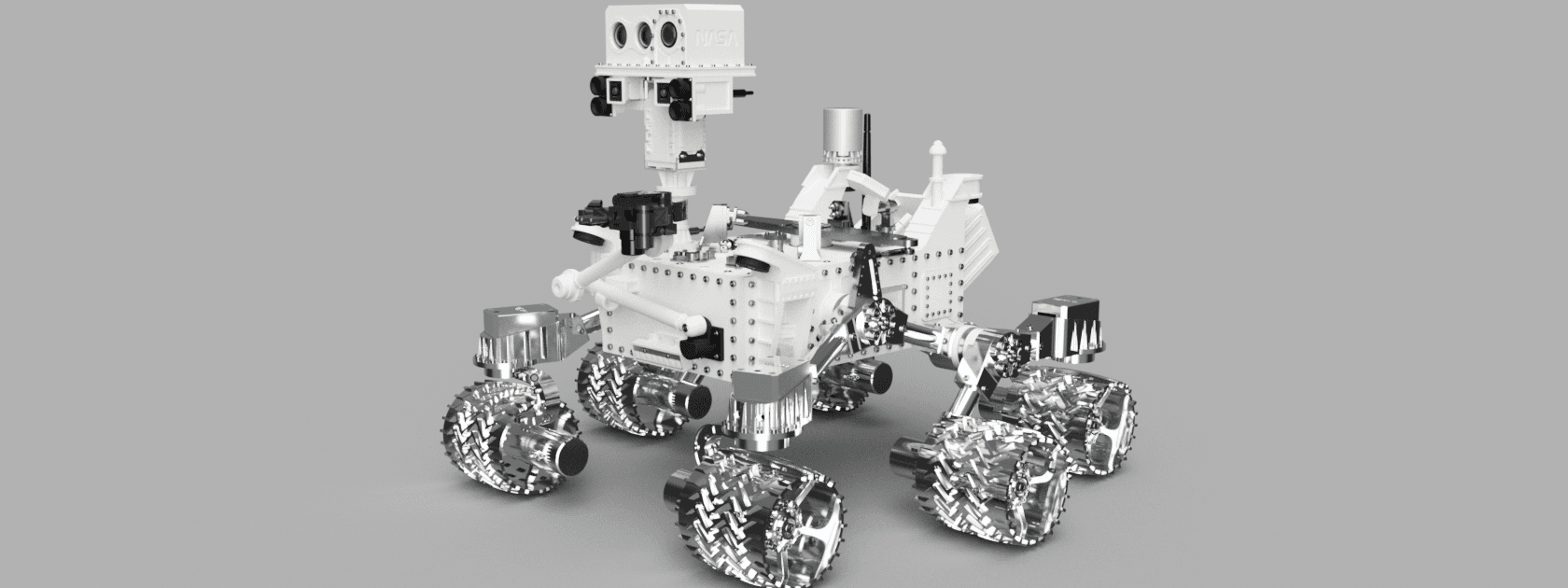
No factory drawings. No source files. Just mission photos, public references, and a lot of careful measurement — rebuilt in Fusion 360 from the wheels up.
550
Hours
1:10
Scale, FPV-drivable
Rocker-Bogie
Suspension, from scratch
Beatty Robotics brought me on as a freelance designer for the build. The goal was a 1:10 interactive display for the Kennedy Space Center — not a static model, but a working rover you could actually drive, wired up to a pair of VR goggles for a first-person view from the driver's seat.
There were no factory drawings to work from. I pulled everything NASA had published publicly, cross-referenced actual build photos to nail down real-world scale, and studied those same photos frame by frame to capture as much mechanical detail as I could reconstruct.
The rocker-bogie suspension was new territory for me — I'd never designed that kind of system before, and it shows up on almost nothing outside of Mars rovers. The hardest part of the whole project turned out to be the motors: getting them to actually fit inside the enclosures at each end of the rocker-bogie arms, in a space that wasn't designed with a motor in mind.
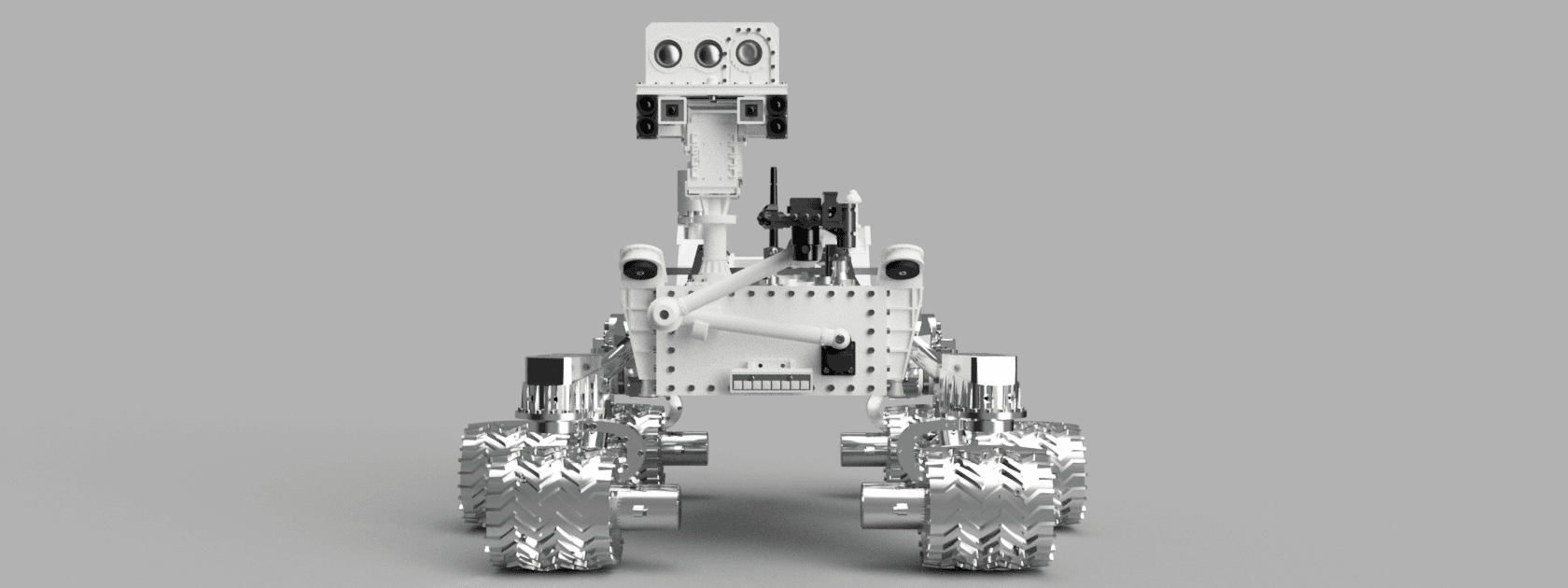
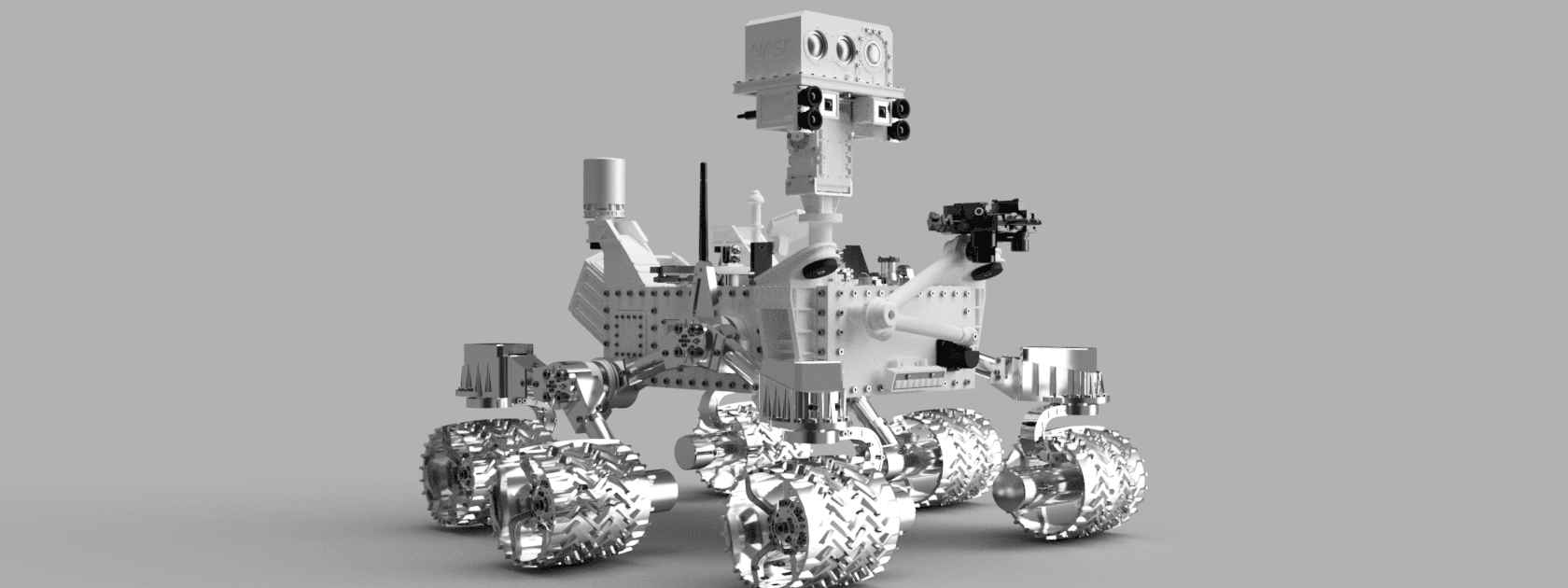
Honestly, I don't think I understood how big the project really was until it was finished. It was 550 hours of just genuinely fun problem-solving — watching all those individually-machined pieces come together into something that actually drove.
The rover was originally commissioned as an interactive display for Kennedy Space Center. A change in administration occurred during the project, and I ultimately lost visibility into its final destination; but the impact it had on my own trajectory was permanent.
I was teaching high school engineering at the time, and this project is a big part of why my career looks the way it does now. It pushed me to go looking for work in industry outside of education — I landed a production engineer role at a YC startup, designing and implementing their internal controls and mechanics. That led to owning a fabrication company, which became fractional systems-building and automation integration work, and now — building Kaisyn Labs Academy — it's brought everything I've learned full circle, back into teaching.
Explore it yourself.
A live, rotatable view of the model — pan, zoom, and inspect the same assembly used to build the physical parts.
Part-by-part build videos.
The manufacturing playlist that shaped how these parts came together — machining, fixturing, and finishing, one component at a time.
CNC Machining a Mars Curiosity Rover Antenna!
John Saunders / NYC CNC
Read the full writeup.
Beatty Robotics covered the project in detail — the goals, the process, and where the build went from here.
Read the Beatty Robotics post